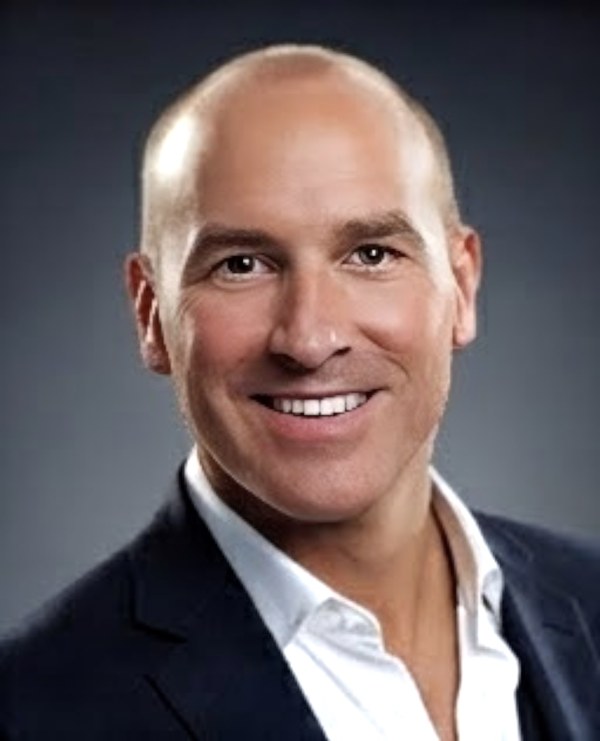
I build the data, AI, and governance foundations that let enterprises move fast with confidence.
I'm Jonathan Salmon, Director of Enterprise Intelligence at Centene, leading a 15-person team in one of healthcare's most demanding data environments. I help organizations build the data, AI, and governance foundations — the platform and reporting control that kills waste and ships core products with best practices.
Proof, not job descriptions
What I've actually owned and delivered — the kind of scope a VP remit is built on.
-
Director of Enterprise Intelligence, Centene
Lead a 15-person enterprise intelligence organization inside a Fortune-scale healthcare company — regulated data, real stakes, no room for vanity metrics. Two years at director level and counting.
-
Platform & reporting ownership that kills waste
Own the platforms and the reporting estate. My rule is simple: every report and dashboard must earn its existence — or it goes. High-utility core products, built with best practices, replace sprawl.
-
Vision into execution, without micromanagement
Known for translating strategy into executable plans and empowering strong engineers rather than hovering over them. Talent development and mentoring are the multiplier on everything else.
-
Founder, two independent ventures
Geodynix — U.S. market-intelligence product, live in production. Profit Sentinel — B2B SaaS for profit-leak intelligence. I don't just govern data platforms; I ship product on them.
Operating principles
The beliefs I actually manage by — not poster slogans.
- Empower strong engineers; don't micromanage.
Hire well, set direction, clear obstacles, get out of the way. Control is the enemy of scale.
- Clarity is kindness.
Say the thing — to your team, your peers, and up. Ambiguity is where careers and projects quietly die.
- Every artifact must earn its existence.
Reports, dashboards, meetings, metrics: prove value or kill them. Waste compounds; so does focus.
- Develop people relentlessly.
Your team's growth is your output. Mentoring isn't charity work — it's how you build an organization that outlasts you.
- Boldness is a practice.
Ask earlier. Advocate louder. Manage up on purpose. Power dynamics are real; pretending they aren't is not a strategy.
- 80/20 everything.
Most value concentrates at the edges; most effort bleeds into the middle. Find the vital few inputs, starve the trivial many, and treat waste as the enemy — because it is.
What I'm reading in AI
Five stories a day from a short list of sources I actually read — each with my one-line take. This is how I stay in the conversation.
Updated Wednesday, September 16, 2026
The AI industry has taken a doomer turn. What now?
My take: When vendors start selling fear alongside their products, ask who profits from the alarm. Leaders should price AI risk like any other enterprise risk — with evidence, not vibes.
How Fyxer built an AI executive assistant people trust
My take: Trust is the product feature here, not the model. If your people won’t trust an AI with their calendar, capability doesn’t matter — adoption is a trust problem first.
The contagion of fear
My take: Cantrill’s point is a leadership one: experts hold the public’s trust implicitly, so alarmist claims carry a burden of proof. Inside a company it’s the same — leaders who cry wolf on AI risk or AI magic lose the room.
We are all product engineers now
My take: The scarce skill was never typing code — it’s knowing what’s worth building and defining it precisely. If your org still rewards output over judgment, AI made your engineers cheaper without making your products better.
Perplexity trusts GPT-6 Astra with end-to-end systems
My take: End-to-end means the AI owns the whole workflow, not one step. The trust bar for that is a completely different bar — it’s an operations and governance problem, not a demo.
Independent ventures
Founder work I run outside my day job — where I stay close to the craft of shipping.
Geodynix
U.S. market-intelligence product unifying demographic, economic, housing, and business data — sold as a Snowflake data product and a self-serve insights app.
Profit Sentinel
B2B SaaS: continuous profit-leak intelligence for mid-market trade contractors, auditing the seams between their operational and financial systems.
Essays in progress
I'm writing on AI in the enterprise, data leadership, and organizational power — publishing soon on LinkedIn and Medium as part of a deliberate content practice. The AI Signal above is the daily version; the essays are the deep version.
Let's talk.
I make time for good conversations — with data and AI leaders, founders who want an advisor, or peers working on the same hard problems. I read everything myself.
jonathan.salmon@gmail.comRésumé available on request.